
Last updated October 15, 2026
Free written scope consultation - allowances, timeline, and change-order rules on paper before a single trade is scheduled
Construction Cost Breakdown: The Dallas Homeowner’s Reference for 2026
The average Dallas kitchen remodel quote carries a $15,000 to $40,000 spread between contractors, and that gap is rarely about craftsmanship. It’s about what’s actually written into the scope and what’s quietly buried as an “allowance” that balloons later. If you’re planning any construction work in Dallas this year, you need to understand not just the numbers, but the why behind each line item. This guide breaks down real 2026 cost ranges room by room, explains how Dallas labor, materials, permits, and soil conditions affect your final price, and shows you exactly how to read a contractor’s bid so you’re not surprised when the invoice arrives. For DIY vs Professional Construction: The Dallas Homeowner’s Decision Guide, see our companion post. By the end, you’ll know what questions to ask before signing anything and where your money actually goes.
Quick Answer
A full construction cost breakdown for Dallas in 2026 runs roughly $150 to $450 per square foot depending on project type and finish level, with a mid-range kitchen remodel at $40,000 to $85,000, a primary bathroom at $25,000 to $55,000, a room addition at $180 to $350 per square foot, and a whole-home remodel at $150,000 to $450,000. The biggest cost drivers in Dallas specifically are trade labor availability, Texas supply chain pricing on lumber and stone, and permit fees that shift depending on whether your home sits in the city of Dallas proper or a surrounding municipality like Richardson, Garland, or Mesquite. The single most effective way to control costs is to demand a written, line-item fixed price before work starts, so that allowance-based pricing cannot inflate your final bill.
Styles & brands we work with







Table of Contents
- Room-by-Room Cost Ranges for Dallas in 2026
- Why ‘Allowances’ Are the Most Common Source of Dallas Cost Overruns
- How Dallas Labor Costs Compare to National Averages by Trade
- The Permit and Inspection Layer Most Online Estimates Omit
- A Contingency Framework for Dallas-Specific Surprises
- How to Convert Allowances into Fixed-Price Line Items Before Signing
- Common Mistakes to Avoid
- Frequently Asked Questions
Room-by-Room Cost Ranges for Dallas in 2026
Before you meet with any contractor, you should know what a realistic price band looks like for your project. These ranges reflect what we’re seeing across Dallas neighborhoods in 2026, from the M Streets to Lakewood to North Dallas. Each tier includes labor, materials, design time, permits, and a standard contingency reserve.
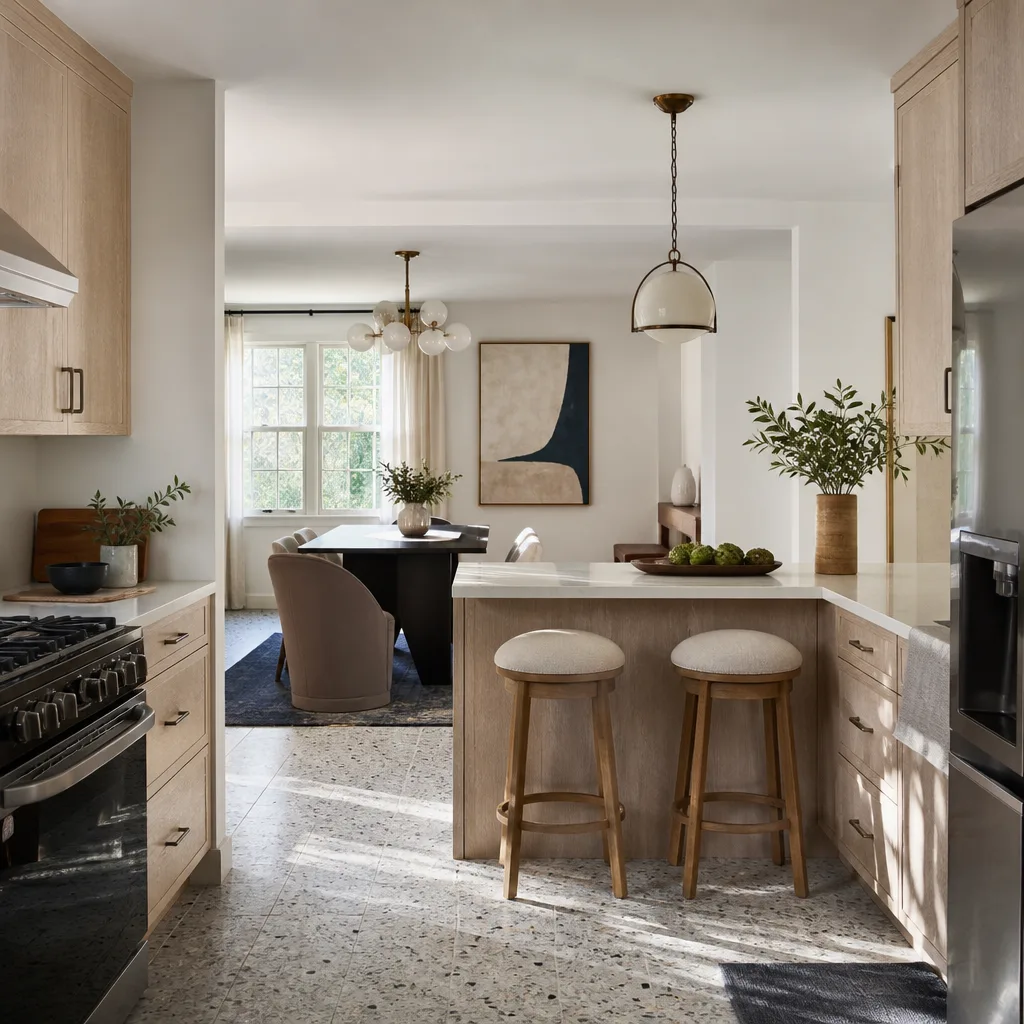
Kitchen Remodel
- Entry Tier ($25,000 – $40,000): Cosmetic refresh. Cabinet refacing or stock cabinetry from a line like KraftMaid, laminate counters, new hardware, new sink and faucet, backsplash, paint. No layout changes. Labor runs about 35 – 40% of this total, with cabinets and tops eating another 40%.
- Mid Tier ($40,000 – $85,000): The most common range we quote in Dallas. Semi-custom cabinets, quartz counters (Cambria or Silestone grade), new appliances, some layout adjustment, under-cabinet lighting, tile backsplash, a modest island addition. With a kitchen this size, electrical and plumbing rough-ins are a real share of the cost, not an afterthought.
- Upper Tier ($85,000 – $150,000+): Full gut, structural changes, custom cabinetry, appliance wall, luxury stone, wider openings, lighting design, often a pantry or mudroom extension. At this level, you’re paying for engineering and sequencing as much as materials.
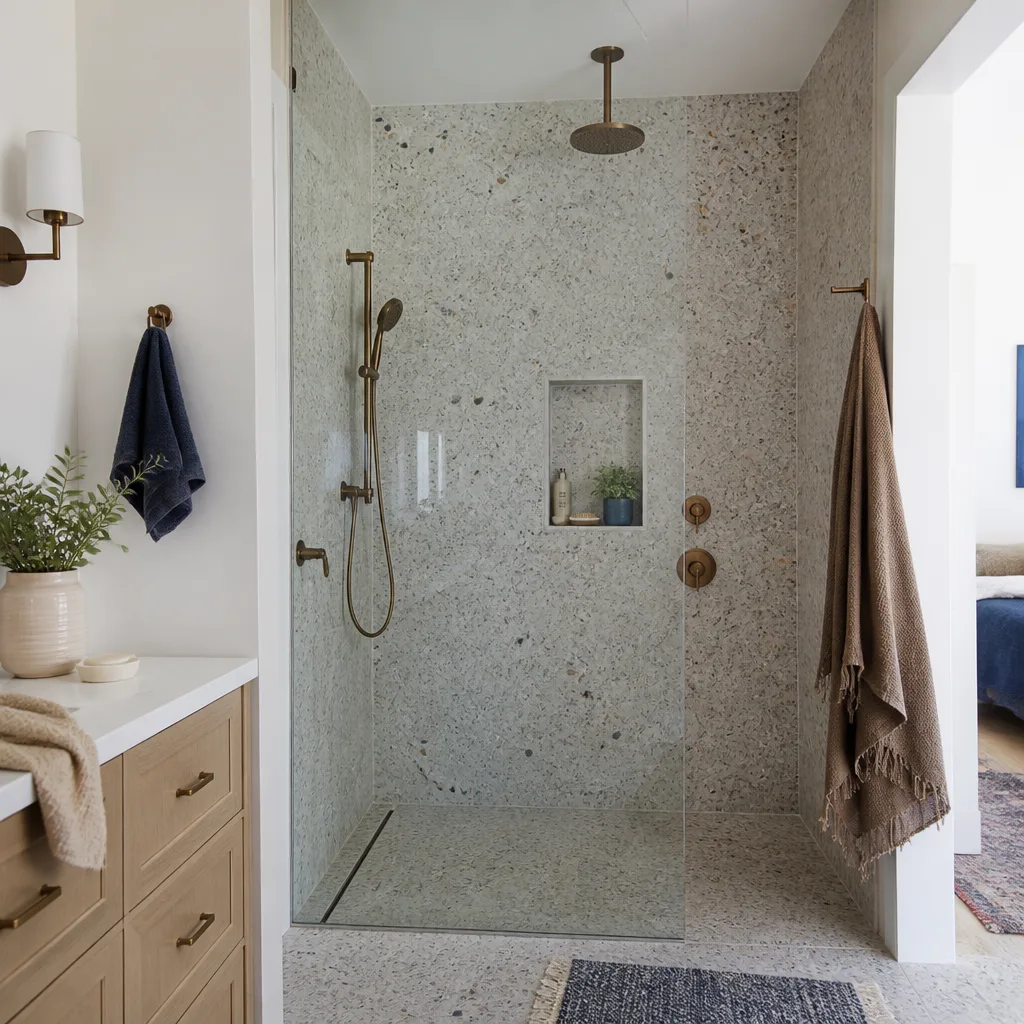
Primary Bathroom Remodel
- Entry Tier ($15,000 – $25,000): Replace fixtures and finishes in place. New toilet, vanity, faucets, shower trim, floor tile. No plumbing relocation. Common in older Dallas homes where the existing footprint works.
- Mid Tier ($25,000 – $55,000): The sweet spot. New shower with tile surround and glass enclosure, free-standing tub, double vanity, new flooring, better lighting, and usually some plumbing movement. In 2026, the shower glass and tile labor are the two biggest line items here.
- Upper Tier ($55,000 – $95,000+): Gut renovation, moving walls or doors, heated floors, curbless shower, body sprays, custom cabinetry. This tier routinely requires a plumber and electrician for multiple days each.
Room Addition
- Basic Shell ($180 – $260 per square foot): Foundation, framing, roof, siding, windows, basic HVAC ducting, minimum electrical. In Dallas, the clay soil and the requirement for engineered foundation plans add cost that national average charts don’t include.
- Completed Living Space ($260 – $350 per square foot): A finished bedroom, bath, or family room with drywall, flooring, trim, paint, lighting, and HVAC connected. The finish work is where additions quietly become expensive.
- Second-Story Addition ($300 – $450 per square foot): Often more cost effective per square foot than a slab addition because you’re not buying new foundation, but you are paying for stairwell engineering, temporary weatherproofing, and roof integration. We see these most often in East Dallas and the Kessler Park area where lot sizes are tight.
Whole-Home Remodel
- Cosmetic Whole-Home ($75,000 – $150,000): Paint, flooring, trim, doors, baseboards, kitchen and bath refreshes, fixtures. No structural change. Common before a sale or after a purchase in North Dallas.
- Major Whole-Home ($150,000 – $300,000): Kitchen and all bathrooms fully remodeled, flooring throughout, some wall movement, electrical and plumbing updates, new lighting, new interior doors. This is where the written scope matters most because the project runs months and allowances are dangerous.
- Whole-Home Gut and Rebuild ($300,000 – $600,000+): Taken to studs, new mechanicals, new insulation, new everything. Common in established Dallas neighborhoods like Preston Hollow or Lakewood where the land value justifies the investment.
These numbers assume you are working with a licensed, insured contractor who pulls permits and carries workers’ compensation. A handyman or unlicensed operator can quote lower, but you absorb the risk if something fails, and when a repair or installation fails, you should expect a free return visit as part of the original contract, not as a favor.
Why ‘Allowances’ Are the Most Common Source of Dallas Cost Overruns
An allowance is a dollar figure a contractor plugs into your bid as a placeholder for materials that haven’t been selected yet, like tile, fixtures, or cabinetry. The builder says “we’ve allowed $4,000 for tile.” Then you pick tile you like, and it costs $7,000. The difference becomes a change order, and your fixed price is no longer fixed.
In Dallas, this happens most often on kitchen and bath projects. A homeowner falls in love with a specific slab at a stone yard on Irving Boulevard or picks a handmade tile at a showroom on Slocum Street, and the allowance quietly doubles. We’ve seen allowance overruns of $8,000 to $20,000 on projects that started with a reassuringly “complete” number.
The fix is simple: choose your finish materials before you sign the contract, or ask the contractor to convert each allowance into a fixed-price line item with the specific product named. At Mason Remodeling Co Dallas home, a written price is delivered before any work begins on every project, every time. That price can be built around named materials you select in advance, not placeholder allowances that drift.
How Dallas Labor Costs Compare to National Averages by Trade
Dallas is not a cheap construction market anymore. Labor costs here run 10 to 20 percent above the national average for most trades, driven by the same factors reshaping the whole Metroplex: strong housing demand, a limited pool of experienced framers and finish carpenters, and competition from commercial work pulling skilled labor away from residential projects.
Here’s what we’re seeing in 2026 by trade:
- Framing: $10 to $16 per square foot on new or addition framing, roughly 15 percent above the national average. The trade with the most schedule volatility. A framing crew’s availability often sets the entire project timeline.
- Electrical: $95 to $135 per hour for licensed work, and in Dallas, a licensed electrician is non-negotiable on permitted work. Panel upgrades on older Dallas homes in areas like Casa View or Lochwood routinely add $3,500 to $7,000 to a remodel.
- Plumbing: $110 to $160 per hour, with fixture installation typically bid per piece. The cast iron and galvanized pipe found in 1950s and 1960s Dallas homes adds real cost when walls open up and the pipe has to be replaced.
- Tile: $8 to $18 per square foot for installation, depending on tile size and pattern complexity. Large-format tile and intricate mosaics are priced at the top of that range, and good tile setters in Dallas are booked weeks in advance.
- Finish Carpentry and Cabinetry Installation: $85 to $125 per hour. Custom built-ins and trim work in older Dallas homes, where nothing is square or plumb, simply take longer.
The trades with the longest lead times in Dallas right now are framing, tile, and cabinet installation. If your project moves a wall or involves full-height tile, expect the schedule to be set by those crews, not by the day you sign the contract.
The Permit and Inspection Layer Most Online Estimates Omit
Any online cost guide that doesn’t mention Construction Permits, Codes & Inspections in TX: What You Need to Know is giving you a number that doesn’t exist in the real Dallas market. The City of Dallas requires permits for most remodeling work beyond paint and flooring, and the fee structure is a real line item.
Dallas Development Services publishes a fee schedule that most homeowners never see until the permit application is filed. In 2026, you can expect these ranges for common project types in the city of Dallas:
- Electrical permit: $75 to $350 depending on scope, plus inspection fees per visit.
- Plumbing permit: $75 to $400 depending on fixture count and whether the sewer line is touched.
- Building permit for a room addition or structural remodel: $500 to $2,500, calculated in part on project valuation.
- Mechanical permit for HVAC work: $75 to $300.
Beyond the city fee itself, there’s the inspection process. Dallas inspections are scheduled by the contractor, and each inspection has a window. A failed inspection means a re-inspection fee and a delay. In surrounding municipalities, the numbers shift: Richardson, Garland, Mesquite, and Irving each have their own fee schedules, and the process differs enough that you cannot use a Dallas city number for a Plano or Farmers Branch project. If your contractor doesn’t mention which municipality issues your permit and what it costs, that’s a red flag. A legitimate General Contractor in Dallas builds permit fees into the written price and pulls the permits as part of the job.
A Contingency Framework for Dallas-Specific Surprises
A contingency is money held in reserve for conditions you cannot see until the work begins. Every honest bid includes one. The question is how much, and in Dallas, the number should be higher than the national rule of thumb for three reasons.
First, soil. Dallas sits on expansive clay that swells when wet and shrinks when dry. This affects foundations, and it means that when you open walls or excavate for an addition, the condition of the slab or pier-and-beam foundation may be worse than anyone could see from the surface. We regularly see foundation repair of $4,000 to $12,000 get added to a remodel once the soil’s effect on framing is exposed.
Second, aging infrastructure. A large share of Dallas homes were built between 1940 and 1980. That means galvanized plumbing, cloth-wrapped wiring, and drainage that was marginal when new and is worse now. A bathroom remodel in Lakewood or East Dallas that opens a wall often turns into a pipe replacement. An electrical panel that was fine for a 1950s house is not fine for a 2026 kitchen.
Third, material changes. A homeowner who chooses a different countertop or cabinet line mid-project changes the price. That’s not a contractor problem; it’s a selection problem, and it’s avoidable by selecting finishes before the contract is signed.
Our recommended contingency framework for Dallas:
- Cosmetic remodel (no structural work): 5 to 8 percent of the contract amount.
- Major remodel with some plumbing or electrical work: 10 to 12 percent.
- Addition or structural work: 12 to 15 percent.
- Whole-home renovation on a pre-1980 home: 15 percent, and we tell homeowners to expect to use part of it.
A contractor who refuses to discuss contingency in writing is asking you to absorb surprises alone. The entire point of a written scope is that surprises are planned for, not discovered on your invoice.
How to Convert Allowances into Fixed-Price Line Items Before Signing
This is the single most effective move a Dallas homeowner can make to protect a construction budget. Here’s the step-by-step we walk our clients through before any contract is signed:
- List every finish material in the project. Flooring, tile, counters, cabinets, fixtures, lighting, hardware, paint. If it gets installed, it’s on the list.
- Select each item, or at minimum narrow each to one specific product line and grade. You don’t have to choose the exact slab on day one, but you should choose the stone yard, the product line, and the thickness. The difference between “quartz allowance” and “Cambria Brittanicca 3cm from the Dallas Cambria gallery” is the difference between a number that holds and a number that drifts.
- Ask the contractor to price each selection as a fixed line item. No allowances. If the contractor resists, that tells you something useful about how their pricing actually works.
- Review the written price line by line before signing. You should see labor, materials, permits, disposal, and contingency as separate lines. If the bid is one number with no breakdown, ask for the breakdown in writing.
- Confirm what happens if a material is out of stock. In 2026, supply chains on some stone and cabinet lines still run longer than anyone wants. The contract should state that substitutions are approved by you in writing at the substitution’s actual price, not added later as a surprise.
At Home Remodeling in Dallas projects, the written price is delivered before any work starts as a standard practice, not an upgrade or a favor. That means every line is visible, and the price you approve is the price you pay unless you change a selection yourself.
Common Mistakes to Avoid
- Signing a contract with open allowances. An “allowance” for tile or cabinets is a blank check you’ve already signed. Select materials first, then sign.
- Ignoring permit requirements to save money. Unpermitted work on a Dallas remodel can cloud your title when you sell and create real issues with insurance if something fails. The permit cost is the cheapest insurance you’ll buy on the project.
- Hiring based on the lowest bid without comparing scopes. Two bids can be $30,000 apart on the same kitchen because one includes new electrical circuits, rebuild of the subfloor, and real cabinet hardware, and the other does not. Compare line items, not totals.
- Skipping the written guarantee requirement. Ask every contractor what their written guarantee covers and for how long. If the answer is verbal or vague, that’s your answer. A real guarantee states its term in writing, and a contractor that stands behind work offers a free return visit if a repair or installation fails.
- Selecting finishes mid-project. Every week you spend choosing tile after demo is a week the crew waits, and waiting time becomes schedule pressure on other decisions.
- Assuming a national cost average applies to Dallas. Dallas labor runs above the national average, our clay soil adds foundation-related surprises, and older Dallas homes carry infrastructure costs that a new-build national chart never includes.
- Not asking who will be in the home. You should know the name and face of every person entering your house before they arrive. A contractor that verifies crew members by name and photo before they reach your door, and sends them in marked uniforms with photo ID badges, is treating your home like a home, not a job site.
When to Call a Professional
Some projects are genuinely DIY, and some are not. If your work involves moving plumbing, opening walls, changing rooflines, or any structural modification, this is the point to bring in a contractor. What makes it urgent is not drama; it’s the compounding cost of getting it wrong. A bathroom remodel that wasn’t waterproofed properly shows its failure slowly, behind tile, where it costs the most to fix. An addition with an inadequate foundation on Dallas clay shows its failure in door frames and drywall cracks within two years. If you’re not certain whether your project needs a permit, assume it does and ask. Bathroom Remodeling in Dallas is our most requested service and the one where we most often see work from an earlier attempt that now has to be redone. Mason Remodeling Co Dallas offers free estimates across the Dallas area. Call (432) 302-8761, and a live person answers, every day, any hour.
Frequently Asked Questions
A mid-range kitchen remodel in Dallas in 2026 typically costs $40,000 to $85,000, including cabinets, counters, appliances, tile, paint, labor, permits, and contingency. A cosmetic refresh starts around $25,000, and a full custom gut remodel runs $85,000 to $150,000 or more.
The biggest reason two Dallas remodel quotes for the same kitchen can differ by $15,000 to $40,000 is scope: what’s included as a fixed line versus what’s buried as an allowance, whether permits and structural work are included, and whether the contractor is licensed and insured or cutting costs in ways you won’t see until later. A lower bid usually means a thinner scope, not a better deal.
Set aside 5 to 8 percent for a cosmetic remodel, 10 to 12 percent for a major remodel with plumbing or electrical work, and 12 to 15 percent for structural work or a whole-home renovation on a pre-1980 Dallas home. Dallas clay soil and aging pipes and wiring in older neighborhoods make surprise costs more likely here than in a newer market.
Yes, in most cases you do. Any work involving plumbing, electrical, or structural changes in the city of Dallas requires permits from Dallas Development Services, with fees ranging from roughly $75 to $2,500 depending on scope. A legitimate contractor includes permit costs in the written price and pulls the permits as part of the job.
Select your finish materials before signing, ask for each item priced as a fixed line rather than an allowance, and insist on a written price with labor, materials, permits, disposal, and contingency broken out separately. At Mason Remodeling Co Dallas, a written price is delivered before any work starts on every project, every time, and that’s never waived.
A cosmetic kitchen or bath refresh runs 2 to 4 weeks once work begins. A mid-range kitchen or bathroom remodel runs 6 to 10 weeks. A room addition runs 3 to 5 months, and a whole-home remodel runs 4 to 9 months depending on scope. In Dallas right now, framing, tile, and cabinet installation lead times set the schedule, so honest contractors build those waits into the timeline instead of promising dates they can’t hold. See Construction Warning Signs: A Dallas Homeowner’s Reference Guide to spot red flags early.
The Bottom Line
A Dallas construction project in 2026 is a six-figure decision for many homeowners, and the difference between a clean process and a painful one is made before the work starts. Real Dallas costs run higher than national charts because of local labor demand, clay soil, older housing stock, and municipal permit layers that generic guides ignore. The way to protect yourself is not to chase the lowest bid. It’s to demand a written, line-item, fixed price with named materials, a stated contingency, a permit plan, and a written guarantee with a clear term. Know who is coming to your door, in writing, by name and photo. If a contractor won’t commit to those terms, keep looking. For more guides & resources, or a free, detailed estimate on a Dallas project, call (432) 302-8761.
Written by Isaac Pruett, Owner at Mason Remodeling Co Dallas, serving Dallas since 2004.
See the difference
 Before
 After
After Before
 After
After Before
 After
After

