
Free written scope consultation - allowances, timeline, and change-order rules on paper before a single trade is scheduled
Cover Home Additions & ADU: The Dallas Owner’s Guide
If you’re looking at a Cover home addition or ADU that’s showing real problems, here’s the straight answer: we install and repair Cover-compatible home additions and ADUs across Dallas, with full replacement and build-out work typically running $45,000 to $130,000 installed depending on square footage, foundation condition, and whether you’re converting a garage or building new from the slab up. Most Dallas homeowners discover something’s wrong not through a single dramatic failure, but through a slow drip of smaller issues: a floor that’s started sloping near the addition seam, drywall cracks spreading from the roofline, or a door that won’t latch because the framing has shifted. By the time you notice those things, the underlying problem has usually been working for a while.
We’re Mason Remodeling Co Dallas, and we’ve handled additions and ADUs in neighborhoods from Oak Cliff to the design districts near the Dallas Market Center. Isaac Pruett, our owner, walks every job before the first nail goes in, because a plan on paper and a house in front of you are two different things. We’re an independent contractor, not affiliated with Cover, but we work on their additions and ADUs regularly and know where these structures tend to fail in North Texas specifically.
- Real installed pricing: $45,000 – $130,000 for Dallas home additions, $90,000 – $220,000 for full ADU construction, $30,000 – $80,000 for garage conversions
- Who is coming: background-checked, uniformed crew, name and photo sent before the visit, photo ID badge at the door
- Written price before work starts: every project, every time, no verbal estimates that grow later
- 365-Day Done Right Promise: if the work isn’t right within a year of completion, we make it right at no cost
Which Cover Models This Applies To
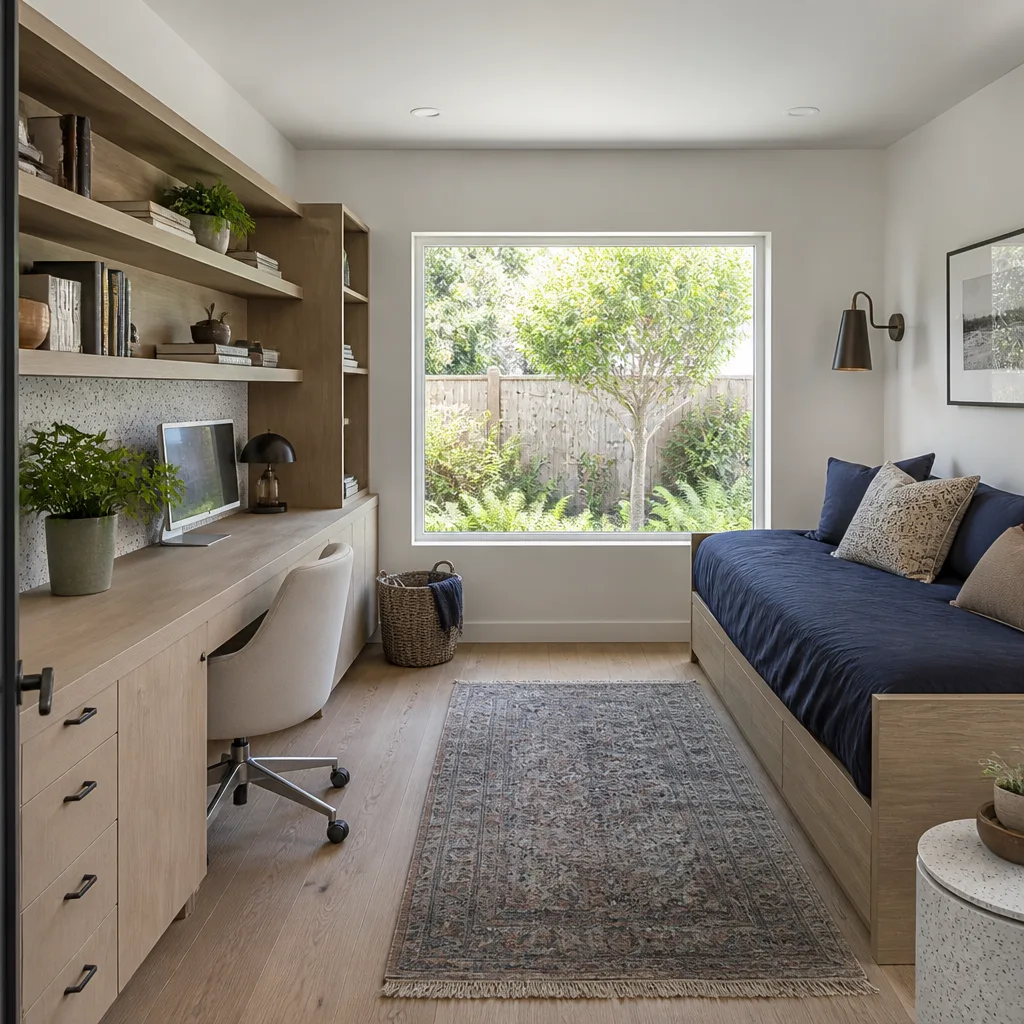
Cover home additions and ADUs in Dallas fall into two broad categories: stick-built additions that were framed onto an existing house, and prefabricated or panelized ADU structures that were delivered in sections and assembled on site. The compatibility question that matters most is how the addition was tied into the main structure, because that’s where movement cracks and water intrusion show up first in North Texas clay soil.
If you have the original Cover paperwork, look for the model or series designation on the permit sheet or the door frame tag inside the addition. The panelized ADU units have a metal compliance plate near the electrical panel with the build date and series number. That plate tells you which wall panel dimensions, roof pitch, and foundation tie-down spacing were used, and matching those specs matters if you’re replacing a section rather than rebuilding. For older stick-built Cover additions from the 2010s, the lumber stamp on any exposed stud tells you the framing grade, and that’s usually enough to source matching material. If the tag is gone or painted over, measure the wall thickness at a door jamb: 2×4 framing reads about 4-1/2 inches, 2×6 reads about 6-1/2. Most Cover additions in Dallas used 2×4 framing with R-13 batt insulation, which struggles with our August heat more than the structure itself does.
On OEM versus aftermarket parts: Cover-branded trim, flashing, and panel connectors are fine when you can get them, but they’re not special. They’re commodity building materials with a sticker. We regularly source equivalent or better materials from local Dallas lumber yards and roofing suppliers, and in most cases the aftermarket option is the same product without the Cover markup. The one place we insist on exact-match OEM is the panelized ADU’s interlocking wall connectors. Those are proprietary, they’re load-bearing, and substituting them with a generic connector is how you end up with a wall that separates at the seam during a spring storm. You should know who is coming, what it costs, and what happens if something goes wrong, before we ever pick up a tool.
Styles & brands we work with







Signs Your Cover Home Additions & ADU Is Failing
- A door that won’t latch or a window that sticks. In Dallas, expansive clay soil is the culprit more often than framing. As the ground swells in spring and shrinks in August, the addition’s foundation moves differently than the main house, and the door frames twist just enough to matter. It starts as a nuisance and turns into a structural problem if the gap at the seam keeps widening.
- Cracks running at a 45-degree angle from window corners. Those diagonal cracks are the classic sign of differential settlement, and they’re far more common on additions than on the original structure because the original house has already finished most of its settling. Ignore them and you’ll eventually see them mirrored in the drywall on the interior wall.
- Daylight visible through the seam where the addition meets the house. This is not a cosmetic issue. It means the flashing has pulled loose or was never properly lapped, and water is getting into the wall cavity every time it rains. In Dallas, that means mold in the wall within a season, and wood rot soon after.
- Floor slope near the addition threshold. Put a golf ball down on the floor and see which way it rolls. More than about an inch of slope across an eight-foot run in an addition under ten years old suggests the foundation piers or slab edge have moved. Dallas’s clay does this all the time, and the fix is a foundation adjustment before anything else.
- Mildew smell that won’t go away or bubbling paint on interior walls. Both mean water is somewhere it shouldn’t be, usually from a failed roof tie-in or window flashing on a Cover addition. The smell is the wall cavity drying out after rain; the bubbling is the paint losing its bond to moisture-swollen drywall.
See the difference
 Before
 After
After Before
 After
After Before
 After
AfterReplacement Cost & What’s Included
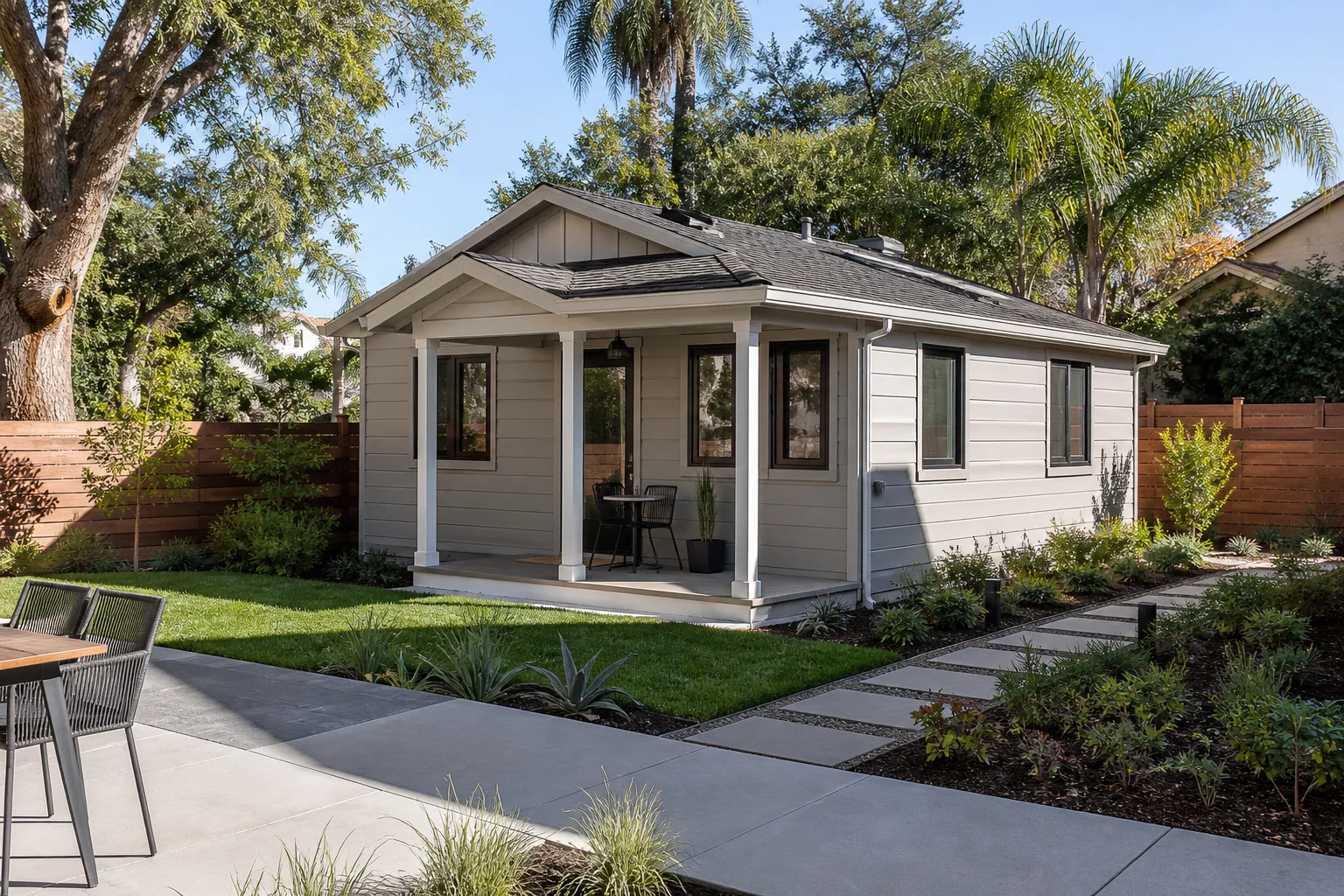
For a Cover home addition in Dallas, budget $45,000 to $130,000 installed depending on square footage, whether the foundation needs adjustment, and how much of the original structure can be salvaged. Full ADU construction runs $90,000 to $220,000, and a garage conversion typically lands between $30,000 and $80,000. Those numbers include all permits, foundation or slab work, framing, electrical, plumbing, insulation, drywall, flooring, and finish trim. We deliver a written line-item price before any work starts, and that price is the price. No verbal estimates that grow on the final bill, no surprise invoices at the end.
What drives the range most in Dallas is the foundation. An addition built on a slab that has cracked or tilted needs either slab jacking or new piers before we can rebuild anything on top, and that can add $8,000 to $20,000 to the job depending on the span. The second-biggest driver is how much of the original Cover addition can stay: if the framing is solid and only the roof tie-in and flashing failed, we save what we can and the price drops toward the low end. If water has been getting in for years, the rot takes us back to the studs. Everything we do is covered by a written guarantee with stated terms, including a free return visit at no charge if the repair or installation fails within 365 days of completion.
DIY or Call Us?
There are a few things you can safely check yourself. Look at the seam where the addition meets the main house: if you can see daylight or feel a draft, that’s a flashing failure, and you’ll want a professional before the next rain. Check the grade around the addition’s foundation: soil should slope away from the slab at least six inches over the first ten feet, and if it doesn’t, water is being funneled under the addition every storm. You can also look under the addition’s crawlspace if it has one, checking for standing water or sagging floor joists with a flashlight. Those inspections cost you nothing and they help us quote the job accurately.
What you should not do is attempt structural repairs on your own. Removing a load-bearing wall, jacking a foundation corner, or re-flashing a roofline without the right equipment and shoring plan is how a $2,000 repair becomes a $40,000 rebuild, and working on a roof tie-in without fall protection puts you at risk of a serious injury. If the addition’s structure has moved, call (432) 302-8761 and we’ll send someone who has already fixed the same thing on a dozen other Cover additions in Dallas. The estimate is free.
FAQs
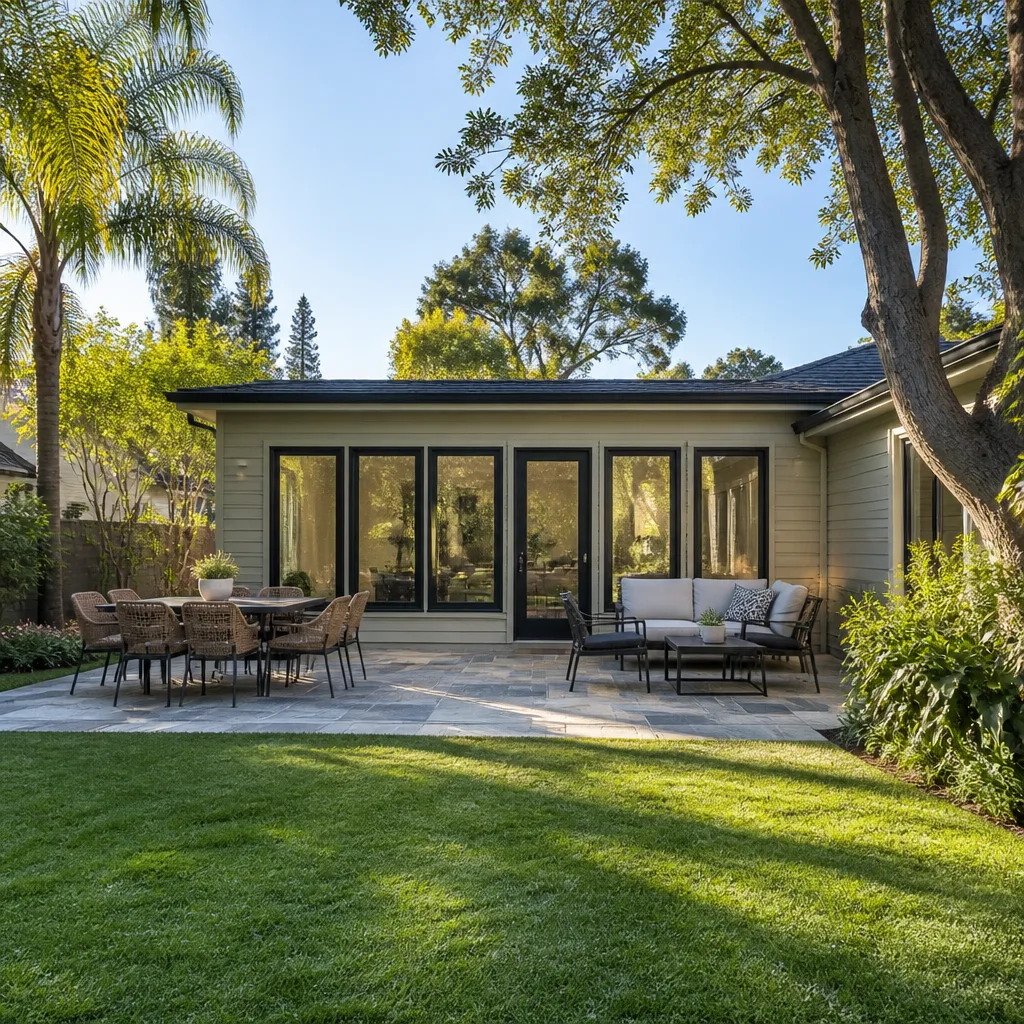
A properly built Cover addition in North Texas should last 50 to 80 years on the structural side, but the roof tie-in, flashing, and paint typically need attention every 15 to 20 years because of Dallas’s heat, hail, and clay soil movement. The foundation is the part that fails first here, simply because our soil expands and contracts more than almost anywhere else in the country. We see Cover additions from the mid-2000s in Oak Cliff with framing that’s still sound but foundations that have drifted an inch or more. Call (432) 302-8761 if you suspect movement, and we’ll give you an honest assessment.
Yes, most failing Cover additions can be repaired when the damage is caught before water reaches the structural framing. Flashing replacement, minor foundation correction, seam resealing, and localized drywall repair are all realistic fixes that cost a fraction of a full rebuild. The expensive repairs happen when moisture has been working its way through the wall cavity for a year or more and the framing itself needs sistering or replacement. The earlier we see it, the less you spend. A free estimate is a phone call to (432) 302-8761 away.
A focused repair like re-flashing a seam or correcting a slab corner takes two to five working days. A full addition rebuild typically runs four to ten weeks depending on size and how much of the old structure must come out first. Full ADU construction runs eight to sixteen weeks from permits to final inspection. We’ll put the timeline in writing with your line-item price before we start, and we pull all permits and pass all inspections in Dallas.
We stock the common materials on our trucks and in our Dallas yard: flashing, sealants, framing lumber, panel connectors, and trim that matches the common Cover addition profiles. For the panelized ADU wall connectors that are proprietary to specific Cover series, we order ahead once we confirm the unit’s model plate information, which keeps your job moving without a parts delay. We also install and service materials from KraftMaid, Cambria, and Silestone when the project touches cabinetry or countertops. For anything we don’t have on hand, we tell you before we quote so there are no surprises.
If your Cover addition or ADU is showing any of the signs above, call (432) 302-8761 to schedule a free estimate. A live person answers, 24 hours a day, 7 days a week. We’ll send a written line-item price before any work starts, and every crew member who comes to your door will have been introduced by name and photo before they arrive.
Written by Isaac Pruett, Owner, Mason Remodeling Co Dallas at Mason Remodeling Co Dallas, serving Dallas and nearby areas.


